Wildlife guide
Polar Bears in Churchill, Manitoba
Why polar bears in Canada gather at Churchill: Western Hudson Bay biology, migration, behaviour, where to see polar bears in Churchill and viewing ethics.
Churchill's reputation rests on one unusual fact: a substantial polar bear population comes ashore each summer within reach of a town that has an airport, hotels and licensed guides.
This guide explains the animals themselves — the Western Hudson Bay population, their annual cycle, what behaviour you are likely to see, and how viewing works without disturbing them.
The Western Hudson Bay population
Bears around Churchill belong to the Western Hudson Bay subpopulation, one of the most studied polar bear groups in the world because of its accessibility. They live at the southern edge of the species' range, which makes them especially sensitive to changes in ice timing.
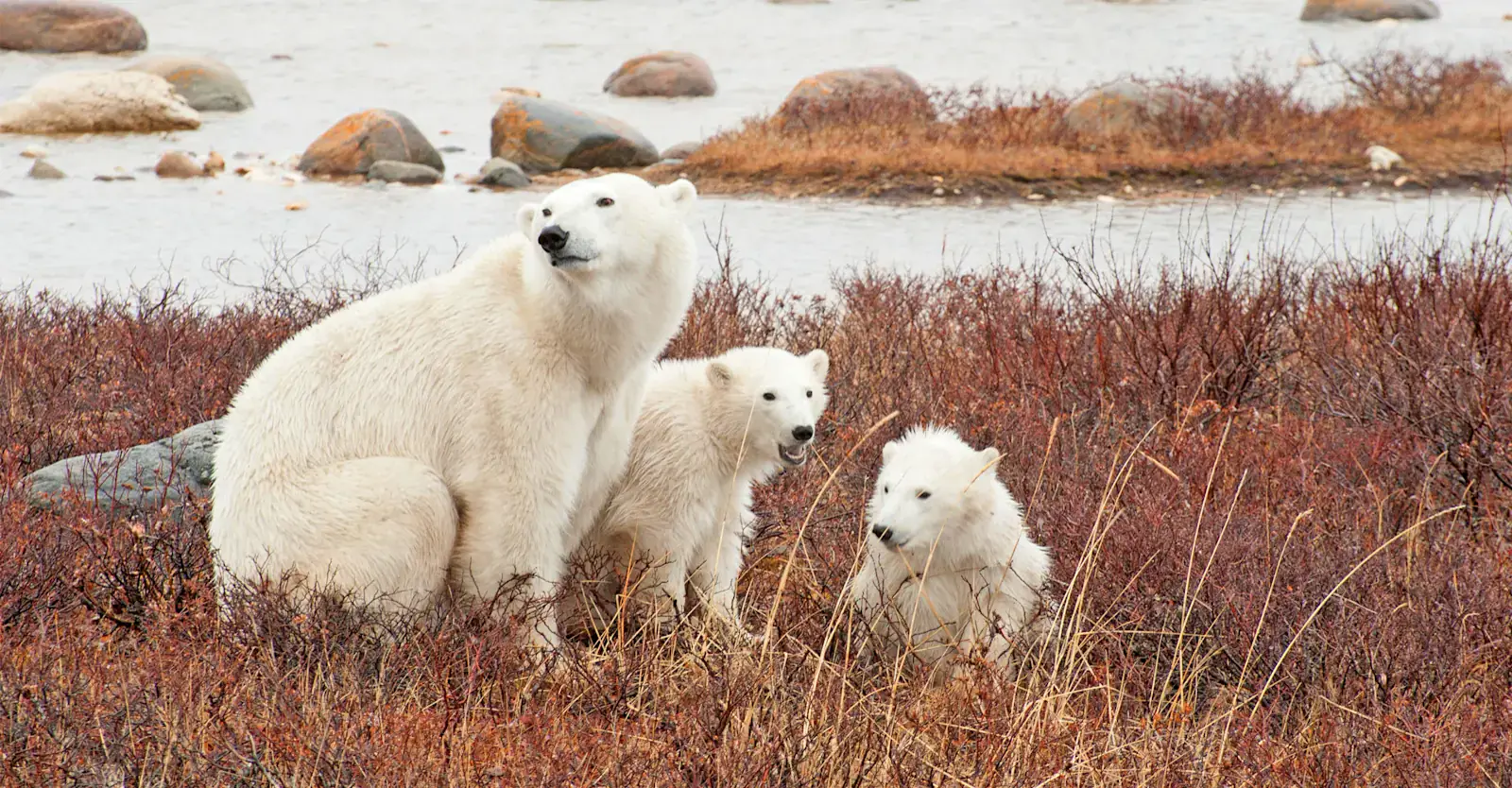
Adult males are considerably larger than females, and family groups of a mother with one or two cubs are a common and memorable sighting in autumn.
The annual cycle
Bears hunt seals on the sea ice through winter and spring, come ashore when the bay melts in summer, fast for months on land, and return to the coast in autumn as the ice reforms. That fasting period is why autumn bears often appear calm and conserve energy.
- Winter and spring: hunting seals on Hudson Bay sea ice
- Summer: ashore, resting, low activity, minimal feeding
- Autumn: moving to the coast, sparring, waiting for freeze-up
- Freeze-up: bears leave land and the viewing season ends
Behaviour you may see
Sparring between subadult and adult males is one of the season's highlights: two bears rear up and push in a slow, ritualised contest that is play rather than fighting.
You are equally likely to watch bears sleep. A resting bear in willow scrub, occasionally lifting its head to scent the wind, is the most common autumn scene and a genuine part of the experience.
Where to see polar bears in Churchill
The Churchill Wildlife Management Area east of town is the core viewing zone, accessed by permitted tundra vehicles. Coastal routes closer to town, used by smaller 4x4 tours, cross rocky shoreline and ridges bears travel along.
Bears are also occasionally seen from the town itself, which is why Churchill runs a bear alert programme and why visitors should never walk outside town limits at dawn or dusk.
Other wildlife of the region
Arctic fox and red fox, Arctic hare, ptarmigan, ravens and snowy owls are regular autumn sightings. Summer brings beluga whales, migratory shorebirds and, on the coast, occasional ringed seals.
Viewing ethics
Distance rules exist because a bear that alters its behaviour is burning fat it cannot replace until freeze-up. Guides keep engines quiet, avoid blocking travel routes and leave when an animal shows signs of stress.
As a visitor the best contribution is patience: let the bear decide the encounter.
Frequently asked questions
- How many polar bears are near Churchill?
- The Western Hudson Bay subpopulation numbers in the hundreds and is regularly surveyed by researchers; the number of bears near Churchill at any moment depends on the season and ice conditions.
- Are polar bears dangerous to visitors in Churchill?
- They are large wild predators, which is why the town maintains a bear alert programme and why visitors stay with licensed guides outside the townsite.
- Do polar bears hibernate?
- No. Only pregnant females den for extended periods; other bears remain active year-round, including through the autumn fasting period near Churchill.
See them for yourself
Our Churchill expeditions are led by naturalists who spend every autumn on this coastline.
Explore expeditions